Akashic Records Reading [Quick]: Ivar the Headless
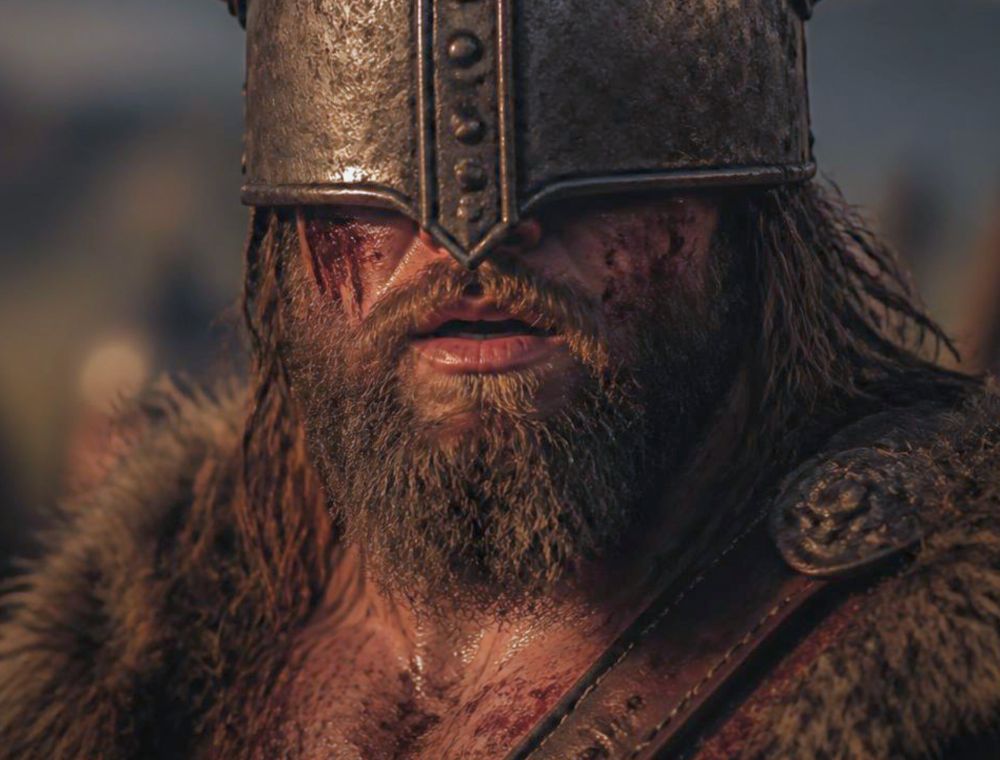
Image created with AI.
There are instances where it feels a reading is deliberating over which information to put forth; then there are others where the information registers as holding an energetic charge, that when released through opportunity (the reading) has it almost leap or burst forward, due to no longer being contained. This is not to say the reading didn’t choose to address the specific information it did; but just to say the material was perhaps more ready than most to be accessed.
War. Images from past-lives of war, lived on Earth, come forth. There are several different ones, that occurred at different points in time, and appear to be as if jumbled together as they come forth, as if they’re stacked, spliced, and compacted in the Akash. As they appear they do so at once, almost as if one’s watching an image with multiple TV channels superimposed on each other. I try to make sense of them individually.
A male soldier with a tall dark or black fluffy hat; the hat’s hair or “fur” is black, and the man’s uniform or jacket appears to be almost entirely bright red. This would be at some point during the Napoleonic wars or thereabouts, participating in warmed conflict in the way armies fought back then. There would have been firearms (muskets?) used for massed ranged fire in lines, sometimes fighting with bayonets in charges and close quarters fighting. Armies and soldiers were quite mobile, they would have to both fight across and travel through long distances and across stretches of land, over many types of landscape. A soldier would be expected to keep their equipment and themselves in good order at all times, while also being recurrently ordered to drag themselves through fields of mud and stone, spend weeks with almost no rations, and be ready at a moment’s notice to throw themselves up close and personal or repel men of a foreign company they’d never seen before, and perhaps never will.
The man’s experience as a soldier was extensive. He went through countless battles while on campaign, always amidst masses of other men who were part of the same army, and constantly under orders form higher authorities. I’m uncertain as to the specific army or country this soldier belongs to (I also don’t have sufficient knowledge to associate uniform to country). Nevertheless, I’m thinking he’s not part of the French army. He’s possibly either Austrian or British. But I’m uncertain about this point – it may not be particularly relevant for the matters this memory addresses.
What strikes me about this life is that there’s a pervasive effect that accumulated in the man’s psyche from each and every battle he fought, during which he was under constant life peril in adverse conditions. I believe that today this effect would to be called as something along the lines of shellshock, or PTSD. During waking moments, even in stillness or quiet, without any conflict, it’s like I’m continually hearing bombs and cannon fire all around me and in the distance, or so does the reading seem to indicate.
This was no doubt the result of being repeatedly exposed to such conditions repeatedly over many battles, during which every single sound represented a possibility of grave injury or loss of life, both to himself and to his peers/companions. And so at some point the nervous system just can’t process each and every single sound, every single instance of input, representing the possibility of critical hazard and danger; and it is left with no other choice but to adjust to its continuous barrage. One might say that, to some extent, he adapted or become desensitized to these conditions.
Except this wasn’t entirely true. What happened was more that his system couldn’t properly cope with processing the barrage of input, and as if absorbed it, now constantly repeating it due to having been overwhelmed by it. Still, the soldier did “adjust” in the sense that he managed to still function, live, cooperate – and follow orders, and fight, in an orderly fashion, despite being assailed by this barrage of impulses. Be it from the outside, or from the inside even when the latter wasn’t present.
The soldier never lose his life in war itself. His specific regiment at some point went back home, and he was discharged on that occasion. The reason why is unclear. Maybe he was deemed too tired to carry on fighting; maybe he had fulfilled a quota of mandatory service; or otherwise, for one reason or another, he returned to his “normal” civilian life [and here I think I now see mainland France, so I suppose he could be a French after all?]. He’s now around 45 years in age, give or take. He’s married, with a wife and at least one child if not more.
But the problem is that he – today we might say his nervous system – just doesn’t seem to be functioning properly. No matter how simpler or quieter the moments in this regular live are; no matter how much civilian and family life are very far apart in terms of experience; he can’t help but react to things from a constant fight-of-flight response. He can’t change it, no matter how much he tries, how much his wife attempts to adjust to, care for – or even cope on his behalf if she could – nothing seems to make any difference.
First, he lives recurrently responding to the external environment as if bombs and gunshot are constantly being fired around him – or can be, at any given moment. Sometimes he’ll wake up at night from the sound of a blast he heard in his ears, even if nothing was there. Over time, this one element may have faded somewhat; but what didn’t fade was how much less open and flexible he had become in regular, everyday human interaction.
He reacts to everything as if matters of life and death were at stake. He recurrently overreacts to small things and irritations out or proportion. He would maybe even see annoyances and grievances, even when these were not there at all. And he could often become defensive, emotional, and/or aggressive in close-quarter interactions. It was as if something in any of these things had triggered the constant stressors of war and its environment in him. Further, perhaps the programmed need to keep functioning despite anything that could happen, the need to stay vigilant towards a constant life-or-death mission assignment, trained and hardened through constant life-or-death scenarios, became programmings that he now could not escape from, and that pushed away anything “normal” or unserious that could pull him away from them.
So he was now “locked” in war. Even as he had left war behind, he couldn’t possibly shake it off from himself. War had become, traumatically if you will, ingrained in him. And he had once gone away one man, and returned home a completely different, deeply affected one.
As a result, if you can imagine, everyone around him felt he was a handful to say the least.
It didn’t help the people in his family and local community couldn’t possibly comprehend what happened to him. All they could see was a broken shell of a man, barely hanging on to their humanity and original sense of self. A man now prone to strange, out-of-place, intense reactions. A man who was now unpredictable, oftentimes not behaving like a man at all, in their eyes.
Their initial understanding and empathy only went so far, if they could barely connect with the human being. They had been told about “bombs” and “war”. Other returning soldiers brought tales about it with them. So they knew about war; they knew it was violent and ugly. They knew it broke men. But they were not there. They were not with him sliding through the blood and mud keeping the head down to the floor, dodging the bullets whizzing by just above it. They were not privy of the deep sense of comradery that could be gored at any moment. They were not advancing with him facing enemy fire while having people all around dropping and not getting up.
There was no television to convey or report these matters. And there was no replacement to the experience of having the blood and body parts scattered across the floor of comrades you just shared a meal and banter with.
Over time others, including family, learned to keep their distance. There was only so much they could do. What became broken over decades of abject violence couldn’t then be met with a comprehension and space from others to match it. He had no answers, and neither did they. And he couldn’t find in him any way how to cope to his own inner world – let alone change or respond any differently to the outside. So he was left to feel utterly damaged and conditioned, if he wasn’t able to control his own reactions.
This led to the creation of further separation with everyone else. The separation, the distance, the odd looks from others. It didn’t help what was already damaged. It resulted in a permanent feeling of isolation and powerlessness, being sunken in a pit of unknown faults. That alone hurt almost as much as what he had originally endured, that created the shock in the first place.
The reading doesn’t show much more about the rest of this life. I don’t think there was divorce or separation in his marriage, but I do feel the distance between him and all others never quite faded. And so never did his “double” sense of trauma. So in this memory, it was, again, as if the two traumas became “stacked” and fused to each other: the trauma to his nervous system, locking him in high-focus survival mode; and the trauma of failing and witnessing everyone losing trust in him after he came back.
Whenever in a reading I’m shown a past-life (on Earth) I’m also invited to take it to the Light. Past-lives, or past-live aspects (personas) who happen to be in an unresolved state spiritually/emotionally might negatively influence the self in certain situations and moments of the current life that trigger or “activate” them.
This particular past-life aspect could be involved in, influence, and/or be part of broader scenarios, in certain moments or more pervasively, of any the following:
- possible sensitivity rejection or RSD (dysphoria): holding the stigma of being flawed, assuming fault for oneself by default, and/or being unable to hold their own, say “No”, or otherwise negotiate equally, when interacting with others even in small things and regular conversation;
- becoming easily defensive, offended, or evasive, to avoid the shocks in small interactions due to the above (or masking it all);
- possibly attempting to manage the feelings of others in order to avoid or repel the violence of the moments above – or the shame felt afterwards from them;
- possibly the stigma of others being left worse, having a bad time, having their feelings hurt, etc. due to oneself;
- possibly the stigma of needing excessive care, attention, for inner issues that are difficult to identify, setting them apart from what’s “normal”;
- frail sense of self-confidence or self-agency; fear of disrespecting rules, of not doing what’s correct, and of other’s opinions and rejection;
- frail sense of worthiness; difficult to justify occupying the space or consuming resources, even those near and dear;
- alternatively quick to self-destruct, go into depressive thought, etc., due to self-annulment to please others, not become indebted, not occupy the space, etc;
- due to the above, having no filters to external comments, suggestions, criticism, etc. even if innocuous; deferring to another’s authority/judgment, with input from others leading to second-guessing oneself, comments being interpreted as criticism, and so on;
This is not to say this past-life aspect is by itself creating these points if present; but if so, let’s say “they’re not helping” so to speak. Taking the aspect to the Light equates to the intention of bringing said aspect to a state of balance and healing. As a reading of the Akashic Records is in the role of accessing these aspects, it’s also under the liberty of conducting such effort whenever the situation calls for it, which is deemed applicable in this case.
The past-life aspect of the soldier is shown standing on the land where he lived after the war, his home; but there’s no home, no house or family, no one but him. It’s just open fields and rolling hills, entirely surrounded by debris, as if a battle had just occurred there, all around him. This scenario, energetic and metaphorical, illustrates not just his inner world throughout his life but also how he felt damaged, and how he felt he “wrecked” the lives of all those around him with his presence, never finding neither solutions nor solace for it.
He is shown standing but slumped forward, looking downward at the ground, with a facial expression halfway between depression and despair. He’s slumped forwards slightly, as if leaning on a cane – except there’s no cane at all, it’s just both of his legs rigidly bent on themselves holding his weight all by themselves, as if almost ready to snap like twigs, barely holding him upright. The Light is illustrated by rays of sunlight shining down through thick, gunpowdery clouds that cover all of the sky, shining down directly on him. As the Light arrives and shines on him, he offers no resistance whatsoever and is taken away, scooped by an invisible stretcher that takes him, with him floating in an horizontal position, above the clouds, upon which he disappears out of view.
As stated in the beginning of the reading, I feel there’s a whole set of past-lives of relatively similar contours, closely “stacked” together as described. And it feels the reading could hypothetically access and draw from any of these lives, signaling there’s room to do so for one more.
This person was a Scandinavian male on the Viking age. This person never participated in open conflict between nations or larger entities per se; but they’d regularly participate in what essentially were pillaging raids, by sea, onto coastal locations further down/South and West of where they lived. So, again, in our eyes they’d be labeled as a Viking.
This person was abnormally tall and muscular even for their context and activity. They were much taller and larger than their counterparts, while also having a very easy time putting on muscle with little accumulation of fat in their body. The result was that this person was a physical “freak”: at 1.98m if not more, they had grown into adulthood as a wall of muscle, a true nordic “Hulk” or monster if you will, almost to the point of barely coming across as human.
They leaned on it too. They portrayed themselves as akin to the figure of the gods of their epics, and of Thor in particular. In battle they would often go bare-chested, wearing an ill-fitted cup-like helmet with horns to the side. Note that unlike modern culture depicts it wasn’t all that common or customary for warriors of this context to wear horned helmets, but at the same time the concept wasn’t foreign to them. On this occasion this person chose to bring such a helmet in the raids they participated in, as they felt it brought attention to themselves, and made them look more menacing.
This helmet however, as stated, was very ill-fitting: it was a simple straight cup or bowl shape, which was too large and not fitted to his own head. Perhaps it might have been purely ceremonial or decorative, not really suited neither for battle nor for him to wear. And when he wore it, the “cup” part would recurrently “slide” forward on his head and block his eyes almost completely. In the heated moments of battle, and/or during raids which were often fought at night, the sight of this person bearing down on you while roaring, and wearing this kind of helmet, would be terrifying; but if you could see the setup up close and the terror element aside, and how impractical it was, it would have looked a little goofy.
The person also fashioned themselves as a berserkr – someone who went into battle in an frenzied state of rage/fury. They didn’t formally learn it anywhere or were culturally christened as such; they simply started adopting that sort of identity in an ad hoc manner, trying to embody the imagery on their own accord during raids, mostly based on their own ideas and preconceptions.
Initially they tried to go into this sort of state of trance without any substances, emulating what they thought was a mindset of “berserking”, when they got to their destinations and fighting broke out. Later on, they did get wind of some substances and drugs that could induce and “empower” such states. They quickly began consuming those drugs nearly, doing so without any measure whatsoever of caution or restraint, and certainly every time they went on a raid.
As a result, they became unhinged and dangerous – even for their own peers. He already fashioned himself as a mighty, godly figure, and binging on drugs simply let loose much more of that side of him. It got to a point – I’m shown the image – where the crew of his longship, still rowing on approach to their destination, saw him standing up at the back of the ship, battle ready, naked torso and helmet on, full-on high and frenzied, swinging his weapon in the air so hard simulating fighting so hard, that a single moment of lack of attention or a miscalculated swing would very easily injure or kill one of his crew.
These men were normally tough and rowdy. These forays were ways of proving themselves, venting the aggression and violence in them, and possibly acquiring gains and loot. So when they got there, they’d usually be hyped, “ready to go”. But with this person behaving like this, such a large and strong individual, in the tight space of the ship still sailing, in such an uncontrollable rage without restraint, tilted them from their otherwise state of excitement onto being weary and reluctant, only replaced by relief when they’d finally disembark, and he would run off on his own ahead of them, towards whatever and whoever they were raiding.
One time – it’s possible this was the same instance described in the image above – after having disembarked at night, and once the commotion of fighting had started, the man at some point took one (or more?) blunt force blows to the back of the head. His poorly crafted helmet did not protect him much; these blows caved in his head, taking his life.
The reading hints this was perhaps not made by an enemy, but by someone from his own crew/team, perhaps the leader, who had deemed this person far too unstable and dangerous to be trusted, and in the confusion of the night, and without anyone to witness it, took matters into their own hands and resolved the situation there and then.
Calling forth the Light for this past-life aspect was fairly straightforward. The aspect is shown, if you allow us the insensitivity, as with half a head, or essentially as being headless, literal and figurative. Literal, in the sense this was the way he perished; and figurative, because this had also been what they chose to embody long before they died: a figure of pure force and display, but without any measure of discernment or restraint. The past-life aspect is thus carried to the Light, without response or resistance, vanishing once they crossed the clouds in the sky above this beach where they had last landed at night.